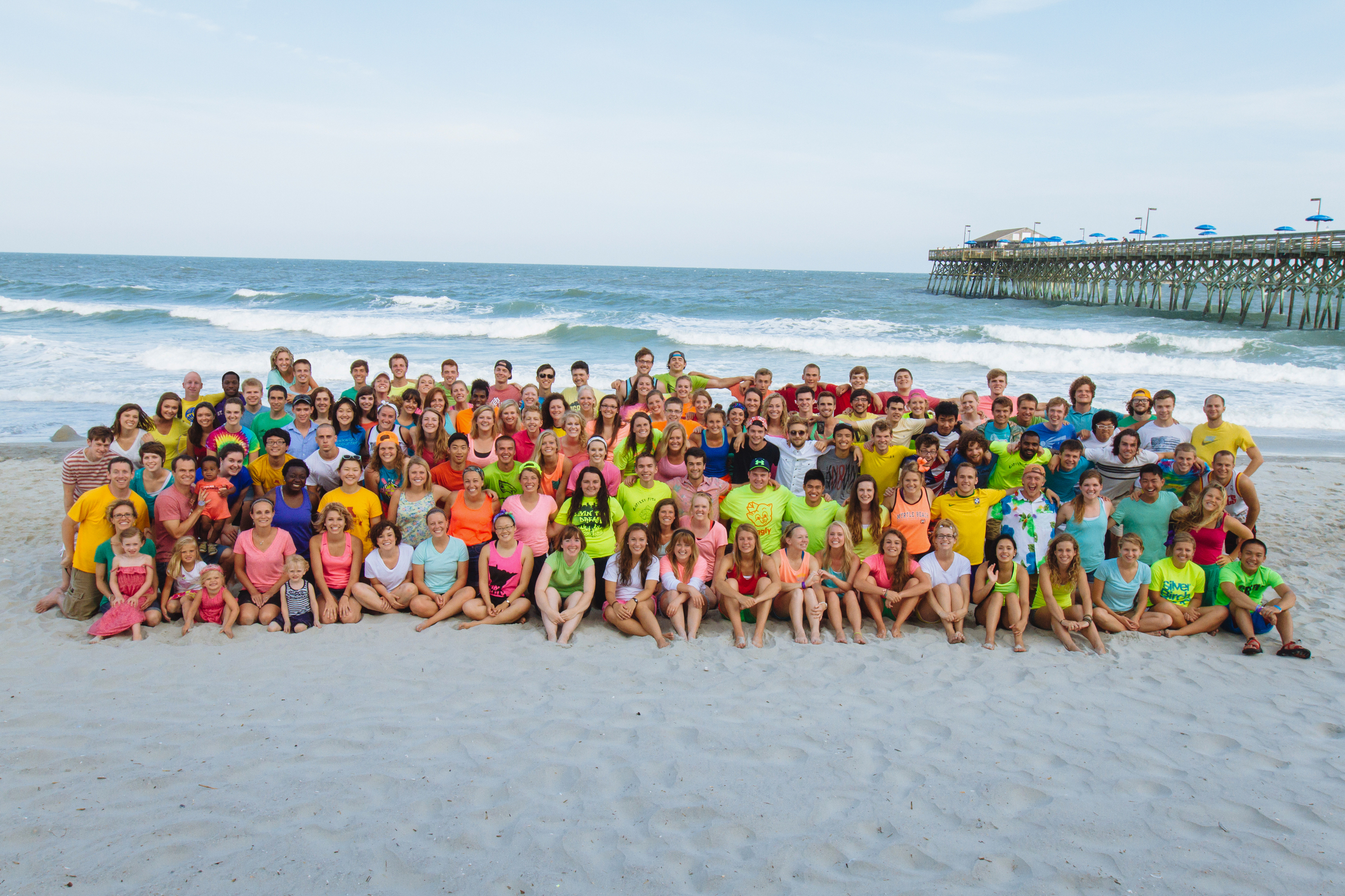
The Servant Team of 2014

There are six teams on Project this summer: Paranirmal Activity (shout out to my team!), Tsongwei Over the Rainbow, First Class, Stormtroopers, Chuck Dynasty, and Order of the Phoenix.

The Order of the Phoenix is also known around Project as the servant team.

The servant team is a designated group of students – one room of men and one room of women – who carry out specific roles and goals throughout the summer.

This year, the two students leading the servant-hearted charge are Daniel Rimmereid and Sara Kallhoff. I talked to each of them about what it’s been like to be servant team leaders this summer.

“Servant team has been a wild ride,” started Daniel. “It’s had its up and downs; everything from being really exciting and loving what’s happening to times of asking myself what in the world I’m doing.”

Because the servant team is made up of different people every summer, the team dynamics play out differently. Daniel has noticed that as well.

“Servant team is one of those things that’s just going to change from summer to summer. It really does depend on who is on the team. It also depends who the leader is. That will help set the tone for the room, and that tone will be different from Project to Project.”

Sara has experiences similar challenges and joys in being the team leader for the servant team.

“It has been a challenging blessing that has taught me more about myself, organization, being intentional, and beauty in differences. But most importantly, being the servant team leader has shown me that God loves me more than I could ever know.”

The main thing we hope students at Project come away with after the summer is a deeper love for their savior. So in the midst of joys, triumphs and challenges, Sara and Daniel are excited about the things God has taught them this summer and the ways he has used servant team to show them more of himself.

CCP comes to Project

I distinctly remember telling a student on Project about our CCP team and saying, “They’ll actually be coming to Project! But that’s a long way off.”

And now they’re here.

In fact, they’ve been here since last Wednesday. The Project all swarmed the parking lot to greet their friends on the team as the travelers shuffled their way out of the vans, completely jet-lagged but pumped with adrenaline and excitement.

I should pause here.

If you don’t know what the CCP team is, refer to the following blog:

http://www.cominneapolis.org/ccp/blog

Continuing on.

Since then, the team members have been spending most of their time with as many of the 125 students on Project as they possibly can. They are specifically sharing what God has done in their lives throughout their time in Sheffield. I have had the pleasure of talking to several members of the CCP team, and it’s amazing to hear about the different ways God has revealed more of himself to them, oftentimes in ways they never expected.

Tonight, during theme training, Steve Discher will give a talk on missions and the ways God has expanded and will continue to expand is kingdom to reach the lost world. The prayer is that eyes will be opened to the brokenness and urgency of the lost and unreached people, and that God will work in people’s hearts – maybe even to go to the unreached themselves.  

The CCP team will also share some stories from their time in the U.K., which will be expounded upon tomorrow night when the team splits up and visits each room on Project during D Group. The students will be able to ask more specific questions and hear more personal stories of how God used this summer in Sheffield to shape the lives of those on the CCP.

As the next two days unfold and the time with the CCP team wraps up, pray that the conversations students have with the team will help cast a vision to reach the lost world. 

The Difference at Work

The south has its own culture, and the workplace is no exception.

Every summer, our students work at local retailers, grocery stores and fast food joints to earn money for their time at Project as well as back home. This year, we have been blessed with jobs at Walmart and Chick-fil-a.

While I was sitting in the Walmart break room last week, I asked a few students if there are any noticeable differences between working in the south and their past jobs up north. Most of them immediately said there are. When I asked them what the distinctions are, the students were silent. They kept exchanging glances, waiting for someone to come up with an answer.

One student finally said, “I don’t really know, actually. It’s just…different.”

We started brainstorming to figure out what it could possibly be that makes working at Walmart in the south seem so different than any job we have had before. Many of us had worked retail in large department stores, so we decided it wasn’t Walmart itself that felt so different. As we dialogued, we really didn’t come up with anything profound:

“Well, it’s much, much warmer down here.”
“Maybe it’s the language? Phrases are used in totally different contexts. Like when someone asked for a buggy, it took me forever to figure out they were asking for a shopping cart.”
“Yeah, totally! I get that all the time, too. It’s so confusing. And it’s weird that different regions of the country literally have different terms for things.”
“I get called ‘sweetie’ and ‘babe’ and ‘honey’ a lot. Men, women, young, old – they all use those terms to talk to us. And it’s not creepy at all like it might be back home. It’s sweet. It feels like an old neighbor or aunt or uncle saying it.”
“Every woman gets a ‘miss’ in front of her name, too. I’m 21 and my boss is 65, but we both get a ‘miss’ in front of our first names.”
“People in the south seem to like Walmart more than they do in the north. Up north it’s all about Target. Down here it’s all about Walmart and people don’t seem to shop at Target very often, which is so strange. That makes working at Walmart really busy, too.”

After these comments, there was more silence. Everything we had said felt insignificant; none of these differences captivated the way we feel while we’re working at Walmart.


Now, as I sit here and reflect, I think I may be able to fill in the blanks.


Before working at my first Summer Training Project, I had never worked at a job with dozens of my friends and peers who were all living together, sharing similar experiences, and striving after the same goal – to know more of Jesus.

Think about it…in what other context could something like that happen?

I had never before felt like I had such a strong community with my coworkers. In previous jobs, I had become ‘work friends’ with people, but it was rare for those friendships to extend to hanging out on weekends or going out for coffee. Not only do we hang out together, but we actually live together.

Another marked difference about my first summer at Project was that I had never before viewed my job as an opportunity to minister to my coworkers and share the gospel with them. I wanted to be friendly and accepted by my old coworkers, but I had never thought about building deeper relationships with them or telling them about my faith.

Along with that, I never saw myself as an ambassador for Christ while I worked various jobs throughout high school and the beginning of college. Like I said, I had never really thought about sharing my faith with my coworkers, so it wasn’t like they would have even known I was a Christian. I didn’t have to ever think about how my actions, speech or work ethic was reflecting Christ. At Project, while students are constantly inundated with gospel truths, it’s impossible to not bring that into the workplace.

And let me tell you, that’s a really good thing.

That’s merely one example of students seeing how the gospel and Christianity is not simply a part of life – it is life. You can’t shake off your Christianity when you get to work. Believers in Jesus have been crucified with Christ and no longer live for themselves, but it is Christ and his love who lives through them (Galatians 2:20). As God grows us, his gospel shapes how we view everything in life, including work.  

Maybe that’s why working in the south feels so different. It isn’t so much because the geographical location has changed;

It’s because we have. 

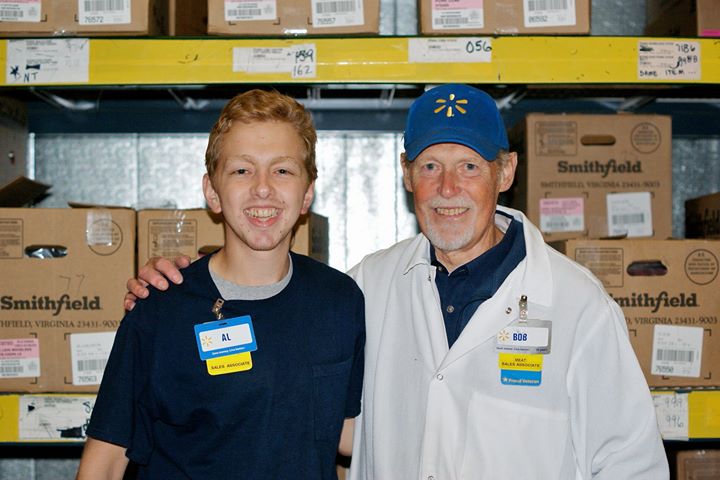
One of our students at Walmart

One of our students at Walmart

A student and Walmart coworker

A student and Walmart coworker

Two of our Chick-fil-a workers

Two of our Chick-fil-a workers


Back at the Ocean View

If you haven’t heard, we bought a motel.

I’m not going to delve into details about that. If you want to know more, check out this blog that was posted in March. Or ask someone in Campus Outreach – they can fill you in!

http://www.cominneapolis.org/comblog/2014/5/23/an-unexpected-purchase

Moving on.

So we’re back at the Ocean View Motel (which may or may not be renamed at some point). Located in Murrells Inlet, SC, the Ocean View is about twelve miles south of our dwelling place last summer. Murrells Inlet is a calmer and more residential environment compared to the atmosphere in Myrtle Beach.  

Last year’s location was a changeup. Project had been at the Ocean View for many years. I spent my first summer at the Ocean View and my second at the Aquarius in Myrtle Beach. Even though I had spent equal time at each, the Ocean View always felt more like Project’s true location than the Aquarius had. Coming back to Murrells Inlet this summer felt like coming home.

I asked one of my roommates and fellow team leader, Katie Beth Strand, what she thought. She and I are both on our third Project and have experienced both the Ocean View and the Aquarius.

“The Ocean View is cleaner and safer and a lot closer to work. It has better access to the beach, too. There’s actually a long list as to why it’s better in a lot of respects. Even with the nuances of the Ocean View, I would still pick this place any day of the week. It’s home. This is where I had my first Project. I tend to get attached to places and my first summer was really impactful for my walk with the Lord so this place has a lot of memories and meaning. It’s where a lot of things began.”

For most room leaders, this is their second Project and first summer at the Ocean View Motel. Last year at the Aquarius, they didn’t have a context for Project being anywhere but there. I wondered if their opinions of the Ocean View would be different from Katie Beth’s or my own. I talked to a few room leaders, and it turns out their opinions align with ours. Here are a few of the comments:

“This motel is so much better. It’s actually pleasant to be in my room and on hotel grounds. I didn’t feel that way last year; Project wasn’t the place I wanted to hang out. If a group of us wanted to hang out together, we would plan to go somewhere off Project. This year I’m really content to be in someone’s room or just under the tent or by the pool. And I actually look forward to getting back to my room each day.
Campus Outreach being invested in it is cool, too. It’s not like we’re reporting issues to an apathetic management team; when we have an issue, there is ownership. They care a lot about the motel, so they actually try to do something about it.
The location is a lot better, too. It’s safer-feeling and nicer. The downfall is that there is less to do in walking distance. But overall, I would choose the Ocean View hands down.”

Although we were blessed to have a place to stay last summer, it seems the general consensus is overwhelming thankfulness and excitement about being at the Ocean View. We are praying Project will be able to stay at the Ocean View for many years to come. 

"Hey! I'm going to be your roommate this summer!"

Arriving at Project is kind of like the first day of college.

Everyone is pretty hyper, music is blaring, chaos ensues, and somewhere out of the abyss comes a total stranger who rushes toward you and emphatically declares, “Hey! I’m going to be your room leader this summer!”

It’s pretty weird.

I mean, how does someone even respond to that?

“…..Great!.....?”

Because the odds are pretty high that this is the first time you’ve ever met this person.

But wait, it gets weirder.

In college, you can spend the entire nine months simply coexisting with your roommate. A lot of people settle for getting along; they don’t actually become very close friends.

Project is different.

It’s two months of extreme intentionality. People want to go very deep very quickly. The cool thing is, as brothers and sisters in Jesus Christ, we are part of a family and has a common thread that binds us. In John 19:25-27, Jesus looks at his mother and John and says, “Woman, behold, your son!” and “Behold your mother!” Biological lines are blurred in the kingdom; we all, as children of God, are part of one family.

That being said, there is legitimacy for bypassing months of groundwork that is normally laid in a friendship. While it may normally take time to find commonalities that bind friends together, we already have that in Christ.

So when roommates talk about deep struggles or broken pasts within the first week of knowing each other, it’s not that strange….

….which is kind of strange.

I talked to Lou Messina and David Cook, both room leaders this summer, about this topic to see if I am the only one who feels this way.

I’m not.

“Yeah, it’s definitely more comfortable right off the bat,” said Lou, “We all come in with the mentality of ‘we WILL get along’ because you know your room is a community and these are people you’re going to be turning to and growing with throughout the summer. That’s just not true for college, necessarily. It’s more freeing and less scary at Project because you have that bond in Christ but there is more pressure to interact well and deal with conflict rather than avoid it. But even that is good.”

David agreed.

“You do so many things together as a room,” he started, “There is a lot more structure at Project, and a lot of that structured time is spent with your roommates. You have intentional time to be together. That’s basically the expectation everyone has coming in, and knowing you’re going to be sharing experiences and growing together changes the vibe of the room right away.”

You see? There is something unique and beautiful about community in Christ. It actually is possible to be different and deep right away because of our bond as children of God. The following quote sums it up well. It’s by Dietrich Bonhoeffer from his book Life Together:

“What determines our brotherhood is what that man is by reason of Christ. Our community with one another consists solely in what Christ has done to both of us. This is true not merely at the beginning, as though in the course of time something else were to be added to our community; it remains so for all the future and to all eternity. I have community with others and I shall continue to have it only through Jesus Christ. The more genuine and the deeper our community becomes, the more will everything else between us recede, the more clearly and purely will Jesus Christ and his work become the one and only thing that is vital between us. We have one another only through Christ, but through Christ we do have one another, wholly, for eternity.” 

Who even leads training, anyway?

Before we dive in, I need to say something:

We have some awesome team leader guys this summer.

I’m biased, because these men are good friends of mine. But even as I attempt to view these guys from an objective standpoint, I come to the same conclusion:

We have some awesome team leader guys this summer.

Now let’s talk about why that’s relevant for this blog.

A little over a week ago, the Campus Outreach staff left. This has several ramifications, but one glaring question is,

So…who is going to give the talks?

Theme Training?

Bible Study Training?

Leaders Training?

Evangelism Training?

Life Training?

The staff guys have been giving the talks, so now what happens?

(Get ready, because this is where my first point comes in).

The team leader guys are giving the talks from now on.

Cool, right?! I’m excited about it. But I wanted to know how our team leader guys are feeling now that they’re up to bat. I talked to Nate Van Zee (Northwestern, leading team First Class), Nirmal Mekala (U of M, leading team Paranirmal Activity) Daniel Rimmereid (Bethel, leading team Order of the Phoenix), Luke Miller (U of M, leading team Stormtroopers), and Jeremy Tan (Bethel, leading Tsongwei Over the Rainbow). Charlie Schumacher is leading Chuck Dynasty, but he is actually on staff with CO and is used to giving talks. So for this blog, I didn’t include him. But shout out to Chuck Dynasty, anyway!

So here is what the guys said:

Nate
Now that the staff is gone, the reality sinks in of being entrusted with and thinking for 130 people. We feel inadequate. We’re not ready. But that’s cool because it shows how much help we need from Jesus. We sometimes ask ourselves, “What the heck are we doing?” We had finally gotten used to being team leaders with the staff helping us and now that they’re gone we’re adjusting again. But it’s really exciting because this is probably the month that’s going to grow us the most.  

Nirmal
I’m feeling pretty good about the talks. Honestly, it’s nice knowing the talks are heavily based off talks that have been given and revised and re-revised over the past few years. And the staff is a phone call away and there are plenty of resources out there to help us shape and fill out our talks.

Leading the Project feels more daunting. It’s a whole different challenge. We want to help meet the needs of students, but there are so many of them and sometimes we put too much pressure on ourselves. Plus the schedule is going to get more packed since we’re taking on more responsibilities. But God brought us through the first month, and he’s the one who is going to lead everyone through the second.  

Daniel
Giving talks has been really stretching for me. It’s been hard to find the balance between “these talks are not what change people, Jesus is” and “you still do need to take this seriously because you have a great opportunity to stand in front of a bunch of people and preach the gospel.” It’s both easier and harder than I thought it would be. It’s easier because I’m honestly surprised that I can turn truths I know into talks and they are actually helping people know Jesus more. It’s harder, though, because when you prepare talks you have to think a lot about what is going to be helpful for the people you’re addressing. But I have felt really supported in the process of giving talks. I love collaboration, and it’s cool to get influences and opinions from several people when I prepare a talk. It feels more like a group builds each talk. Overall, I’m really excited for the team leader guys to give talks.  

Luke
I’m feeling very excited about the talks. It’s a sweet opportunity to share different things the Lord has been teaching me. Plus it’s a unique platform and I’m privileged to be one of the guys who have the opportunity to do this. There is a lot of responsibility though. We feel some pressure to do well and serve the body of Project through the things we’re sharing. We don’t want to put self-imposed standards and burdens on ourselves, but we do want to try our best and hopefully the talks will be helpful.  

Jeremy
I’m pretty nervous to give talks – I get nervous pretty easily. It usually stems from people-pleasing and insecurities. But that’s kind of cool because my first talk is on insecurities, so as I've been preparing the talk it’s like I've been preaching it to myself! So although I’m nervous, I’m still really excited for the team leader guys to give talks.


I interviewed these guys throughout last week before they had given their talks, and since then they have started leading the different trainings.

THEY HAVE DONE SUCH A GREAT JOB!

Each one of these men is unique and brings different gifts to the body of Christ, and those strengths have shined through their talks. They have also let the Project see their weaknesses while they’re up front, like Jeremy talking about his insecurities and Daniel talking about feeling weak.

We, as a Project, are so proud of these guys and we’re excited to see how God uses them and grows them in their leadership position over this next month! 

#STP14Convinced

I’m a communications major.

Social media is inherently part of my degree.

Social media is also almost always part of my jobs and internships.

So it was no surprise when I was told part of my job as the STP communications intern is to update and manage the Summer Training Project social media accounts.

Pause for a plug.

Here are the links for our social media sites! Check ‘em out! Like or follow!

Facebook

https://www.facebook.com/comstp

Twitter

https://twitter.com/comstp

Moving on.

As some of you may know, hashtags (#) are becoming a big deal on every social site. What started as a Twitter feature is now a substantial part of other sites, including Facebook and Instagram. That’s important to know, because those are the main sites our students are posting to this summer.

Although it’s easy to get too caught up in technology and sucked into social media in an unhealthy way, there are good and helpful things about these online tools. One example is the hashtag.  

If you search a hashtag on Facebook, Twitter or Instagram, you can see every picture, video and status that has been posted with that particular hashtag. The feed that comes up is a compilation of everyone’s posts. No longer do people need to search high and low for posts related to topics of interest. The hashtag does it for you.  

In an effort to use this convenient feature, we have established a hashtag for our students at Project this summer.

#stp14convinced

This is the hashtag for STP 2014.  Go ahead, look it up! Every few days I search the hashtag and it’s always fun to see what students are posting. I’ve seen everything from encouraging Facebook statuses about things people are learning about Jesus to artistic pictures on Instagram of the many adventures students have during their free days.

A lot of the students here talk about how hard it is to keep up with all their friends and family back home. Social media is obviously not an ideal or adequate replacement for a phone call, but it can help supplement since students are able to quickly post several updates throughout the day.

I hope all the friends and family back home find this source helpful! The students at Project enjoy using the hashtag to find each other’s posts and look back over the weeks to see the fun that has happened in South Carolina, but we also want this to be serving those who aren’t at STP.

Dozens of posts come in every day, so keep checking in!

STP Theme

The Summer Training Project always has a theme.

The theme is chosen well before Project is underway. The staff and team leaders take time to think and pray about which book of the Bible the Project should study for the summer, and what theme could be drawn from that book.

This summer, the students at the Summer Training Project are studying the book of 1 John, along with a few verses from the book of John.

As the CO staff team poured over 1 John and brainstormed reoccurring themes throughout the book, several potential options came to mind. The lengthy list was whittled away until one remained:

Convinced...

The End? Or the Beginning?

Staff have returned.

This is it:

The beginning of the end.

This is our final week at Project, and in a few days it will be time to pack up and head on home.

It sort of feels like yesterday that the caravan of vehicles pulled into the Aquarius Motel.

It also feels like a year ago.

Either way, it’s going to be over in a couple of days.

The final time spent in South Carolina will be devoted to relaxing, cleaning, and return training. The last talks are given through the lens of transitioning from the “spiritual greenhouse” of Project back to our various homes and campuses.

God has been faithful to change lives this summer. Some students went through heart changes as drastic as becoming believers; others grew in their intimacy with Jesus; many caught a vision for making disciples and using their lives to spread the gospel as Jesus commands of us. Whatever the case, I don’t know a single student who is leaving this summer unchanged.

Every experience on Project is different. I talked to a few students to get their personal accounts about what God has done in their hearts this summer.

Julie, a senior at Bethel, has been a team leader for the Rickrollers.

“I feel like there are so many things the Lord has done in my heart this summer. One thing that was huge for me – and I think a lot of people at Project can relate – is the idea of, ‘He delights in me!’ I’ve had a growing awareness of how unfathomable God’s love for us – and for me – really is. He sent his son to be a sacrifice for us! I can’t wrap my mind around that kind of love.

Another big thing the Lord did in my heart was deepen my brokenness for unbelievers and sharing the gospel. There are lost people in the world and we should be making disciples because people are perishing! I’ve always known that and thought, ‘Yeah, that’s true, so I’ll get on this disciple-making bandwagon.’ But it was never a Holy Spirit conviction of, ‘WOAH! There really are souls perishing!!’ So I’m thankful the Lord has revealed that and I’m excited to bring that back to the campus. I’m excited to share Jesus with people; not because I feel burdened or pressured to, but because I have an overflow of Jesus’ love for me.”

Katie Beth, a junior at the U of M, has also grown in sweet ways over the past nine weeks.

“Perseverance has been a personal theme for me this summer. God has totally changed my heart toward Him. Coming into Project I was not at a place where I desired to pursue Him much, and I was feeling really inadequate in leading girls and pointing them towards Jesus.

Now He has given me such a strong desire to know Him more and to hunger and thirst after Him through reading the Bible more and just getting to know him and basking in his love.”

Greg, a recent graduate from Bethel, has spent this summer at a team leader for the servant team.

“One of the biggest things God has taught me over the summer is about my inability to control others’ growth. I may plant and I may water but it’s ultimately God who gives the growth. Seeing my efforts not always pay off this summer was humbling. Sometimes I put in a ton of effort planning for D Group and it just doesn’t go the way I want it to and that’s frustrating, and sometimes I’m not as prepared and it goes really well – I’ve just seen how God really is in control of all those things.

I’ve been learning to take contentment and joy from that. It’s all God’s work and only God can give the growth, yet he chooses to lovingly let us be a part of that and that’s been really sweet to learn and see. I’m learning that I’m not in control of the lives of people I’m trying to minister to and yet there is still a harvest and a fruit of our labor if we don’t give up (like we see in Galatians 6:9).”

Luke is a junior at the U of M, and he has been discipling other men as a room leader.

“One sweet thing about being a room leader this summer has been the opportunity to get a glimpse of what God is doing in the hearts of several different people as opposed to just me. Last summer, being down here as a disciple, the Lord did a lot in my own heart and life, but I wasn’t really conscious of the guys around me or what God was doing in their lives.

But this summer, as a room leader, it’s been really sweet just to see the ways God has been working in and using and growing the guys in my room and the other guys on Project that I’ve been able to get to know. It’s been sweet to get a bigger vision of God and a glimpse at all the things he’s doing, even just in one room. Seeing that has brought me so much more freedom in realizing that it’s not all about me, and I’ve had so much more joy in seeing the ways God is changing hearts and using people to mutually encourage one another.”

Emma, a sophomore at St. Thomas, is finishing up her first summer at Project.

“I feel more excited to share the gospel with people. Through being at Project I have experienced how sweet it is to live in the freedom that Christ has brought me. I’m totally accepted by God. I’m totally loved by God. There is nothing more I can add to that, and there is such joy in being free to fail and still be totally accepted by Christ. It’s also been so sweet to live with other believers who know that same freedom because we are free and able to love each other now.

On the flip side, I’ve also seen how broken lives can be without Christ. Through talking to people on the beach, through talking to my coworkers and hearing about their lives, through hearing about hell and God’s wrath, it has made me more and more sad for people who don’t have Christ. I think I’m now doubly motivated to share the gospel because I’ve seen how awful it can be to live without Christ and I’ve experienced how sweet it is to live with Christ. I want people to be freed from their brokenness and live in the freedom that I got to taste this summer.”

As these testimonies portray, the Lord has been at work this summer. These are merely a handful of examples, so please ask other students to share what they have learned and grown in the past two months.

Project is winding down, but this certainly isn’t the end, because the Summer Training Project is not an end – it’s a means. Project is a means to loving Jesus more. It’s a means to finding community. It’s a means to gaining a vision for ministry on the college campus. It’s a means for understanding discipleship. It’s a means for learning more about the God of this universe. It’s a means to loving and caring for the lost and broken world.

So you see, this isn’t the end.

It’s only the beginning.

AIT

If your student is an athlete, you’ve probably heard him or her talk about AIT.

If your student is not an athlete, you probably have no idea what I’m talking about.

AIT stands for “Athletes in Training.” Here’s a link I think you’ll find helpful:

http://vimeo.com/49700593

This video sums it up better than I can describe. In part because a picture is worth a thousand words (so a video is presumably worth more) and also because...

…well, I’m not in AIT.

BUT! I do know the people who are. So let’s hear what they have to say about it, shall we?

I asked a few of the AITers some questions about the program and their lives as college athletes. Here’s what I found out:

AIT is a 4-day-a-week program for athletes. This year, the sports they are training for include football, basketball, rowing, soccer and ultimate frisbee. The athletes gather at Crabtree Gym, where they have indoor and outdoor facilities to accommodate any and all training needs.

But physically training for a sport is not the only purpose of AIT.

I asked KatieJo, a sophomore softball player at St. Thomas, how AIT has affected her this summer.

“AIT has definitely taught me how to play for the glory of God and how to thank him for the abilities that he has given me. Last season, being a new believer, I didn’t really know how to play for someone other than myself.

During AIT we’ve heard talks, listened to sermons and testimonies, read through Bible verses, and prayed for our teams back home. I’m excited to go back and play for the glory of God.”

Sara Kallhoff, a soccer player and junior at Northwestern, agreed.

“AIT has definitely helped me realize that discipleship and showing God, whether I’m playing my sport or just spending time loving the girls on my team, is what matters. Soccer isn’t the most important thing. The most important thing is that I’m showing and sharing Christ with the girls on my team.”

So yes, AIT helps to physically prepare students for their seasons. But more importantly, it helps students cultivate a gospel mindset about sports and remember that they are followers of Jesus first, and athletes second.

Interns

Every summer, Campus Outreach hires a handful of interns for the Summer Training Project.

This year, we have nine.

There are various needs to be met on Project, and it is such a blessing to see the ways God has created individuals to be able to meet those needs.

There are two main categories for interns: Finance and Communications.

Communications is broken down further into video, photography, podcasts, and blogging internships.

Let’s start with the finance team.

This year on Project we have Maura Bickner, Ryan Carriere, and Harrison Hitt serving the Project with the gifts God has given them by organizing and handling all finances. This primarily includes support that comes in for students as well as reimbursements for those who have an overage in support. The three students have been handing out weekly support folders to keep students up to date on how much support they have and how much they still owe for Project.

Next up, the communications interns.

This summer, Luke Miller and Greg Stewart are our videographers. A few products of their hard work can already be found on the Campus Outreach website (www.cominneapolis.org). The duo is working on the Project recap, promo video, and various student testimonies. Greg is also working on videos for the global staff conference – a conference for Campus Outreach staff from all over the world.

The other dynamic duo we have serving Project needs is the photography girls! Megan Arnold and Nikki Nelson are tag teaming photography this summer. The two are using their skills and advanced cameras to capture the Kodak moments of STP. Their wonderful work can be found easily on the STP Facebook page (search Campus Outreach Minneapolis Summer Training Project).

Isaac Chan is serving by handling podcasts this summer. Are you an STP student who was sick or absent for a training? Are you a curious parent who wants to know what talks your child has been hearing all summer? No problem! Every talk is recorded, and Isaac has been uploading them to the Summer Training Project website (stp.cominneapolis.org). Check them out!

That leaves my internship as the blogger. My job this summer entails updating social media (Facebook and Twitter) as well as blogging for the website. The primary purpose for STP having a blog is to serve and update family and friends back home about the happenings at Project. Many students have limited time to update their supporters and loved ones. This is a way to keep them in the know, if only in regards to broad, overarching topics (for more details and personal accounts, keep asking the student you’re connected with – I’m sure they would love to share with you!)

So those are the interns! We have enjoyed serving the Project. Please keep praying that God would use us over the course of the next few weeks!

Campus Time: Refresh, Refocus, Remember

The four main campuses at the summer training project are Bethel, Northwestern, U of M, and St. Thomas.

On Tuesday evenings, the Project breaks off into our respective campuses to have what we like to call…

Campus Time.

Campus Time looks different for each campus depending on what the student leaders have planned for the week.

The main purposes of Campus Time are to bond as brothers and sisters in Christ, develop a group unity, and plan and pray for returning to the campus.

Relationships formed at Project are incredibly important. The fellowship to be had at Project is a sweet blessing. But the most important relationships, arguably, are formed with those who are on the same college campus.

Why?

Project is two months of the year. At minimum, we spend 8 months on our college campuses. Project has been referred to as a “bubble” because we are constantly around community and being poured into via talks and intentional conversations, and it is normal to converse about the gospel at any time.

However, home is different. When we are back on the campus, it’s easier to become complacent and caught up in putting our hope in things like popularity, body image, grades, etc. The relationships we have with our brothers and sisters back on campus are the ones we turn to for gospel truths, friendship, and pointing each other back to Jesus, which makes our friendship that much deeper.

Campus Time is not just relationally helpful, but also strategically helpful. Every university is unique in its structure, theology, and student body; from a small city-like public school like the U, to a large, private Catholic university like St. Thomas, to a smaller, private Baptist university like Bethel. Therefore, thinking and planning for ministry back on campus looks different for each group of students.

Additionally, each university’s Campus Outreach is composed of unique students with different strengths and weaknesses. We want to tailor our ministry to build off strengths and pray through as well as help each other with weaknesses.

Although Campus Time may be as formal as designating ‘ministry partners’ or delegating dorms for ministry in the fall, or as informal as getting Chipotle and bonding as we chat about our lives, Campus Time is meant to refresh ourselves, refocus our vision, and remember the campuses where God has placed us.

Life Training

Every Sunday morning, before heading off to church, we start our day with Life Training.

Which is what, exactly?

Probably what you would guess: talks about various life topics and what it means to look at the world through a gospel lens.

So...what topics?

Glad you asked!

So far, we have investigated subjects like “Free Time,” “Free Identity,” “Worry Free,” and “Free from the Love of Money.”

Obviously, there is a trend amongst these topic titles. Our overarching theme of “Free” is a topic that the staff and team leaders want to incorporate in each talk.

Cody Walkup and Patrick Rydeen are giving these talks now that staff are gone.

The point of Life Training is to dialogue about topics and equip us students for the years to come. College ministry, for most of us, is only a short season in our lives. We want to be a people who love Jesus and are walking with him for the rest of our days.

It is important, as well as practical, to address topics that everyone in our society faces through a biblical lens. We will all deal with things like handling finances, struggling with people-pleasing and body image, working jobs and making disciples in the workplace, and balancing between being over-committed and lazily idle.

That is essentially the point of life training. Once the talk is over, the floor is opened for question and answer time. We students are all struggling with different things, and certain topics really hit home for individuals. Q&A is an opportunity to ask the pressing questions that the talk hasn’t already answered. If the staff or team leaders do not have an answer, then the group collectively works to discover what the Bible says.

Although the Bible does not explicitly say, “This is how you should view working at Walmart this summer,” we can ask ourselves the question, “In light of what the Bible does say, how can we view working at Walmart this summer?” We can find Biblical truths to shape our worldview, and we can find Biblical truths to combat the lies we believe. When God is working in our hearts, the promises in the Bible change our perspective on everything.

CCP

Well, they’re gone.

No, not the staff – they left a while ago.

I’m talking about the CCP teams.

CCP stands for “Cross Cultural Project.” This summer, we had two CCP teams; one to India and one to Lebanon (for more specifics, feel free to ask a student!)

For the past week, our Project has been blessed to have had both CCP teams visiting us. The Lebanon team just arrived home from Beirut, and the India team will be flying out next week.

When the CCP team comes to visit, you cannot help but become more missions-minded.  It is such an encouragement to talk with these fellow college students and friends about what God is doing in their lives and the things they are excited about and fearful for when it comes to missions.

Last week, during the Theme Training talk, Andrew Knight spoke on missions. It was practically impossible to walk out of that room unchanged, or at least unchallenged. I have talked to several students who have said they will not be able to view missions – or their own lives – the same way again.

(If you want to listen to Andrew Knight’s talk, it will be posted on the website along with the other talks from this summer!)

At the end of the talk, we sang worship songs which were concluded by a recording of the ‘call to prayer’ that Muslims hear multiple times a day in places like Lebanon and India. For many, that was the moment in the evening that influenced them the most.

The Project has been buzzing since then. I have overheard conversations about missions countless times over the course of the week. It has been wonderful to be around the CCP teams and to remember that the gospel is needed all over the world and God is working his plan of redemption everywhere, even right now.

I ask you to join me in praying that this new heart for missions that many of the students have will not fade away. I pray that the missions-minded mentality is not superficial and fueled by the excitement of the CCP teams and a convicting talk, but rather fueled by a love for Jesus and a broken heart for the unengaged and unreached peoples of the world.

Prayer request: Pray for a faithful and fruitful trip for the India team!

When the staff are away...

It’s that time.

Project is over halfway to completion, which means…

…staff is gone.

That’s right. All have departed.

For those of you who haven’t been informed by your student, this is how Project works: Project is nine weeks long, and four weeks into the summer, the Campus Outreach staff leaves. Only students remain.

What?!

Don’t worry, we are not running around Myrtle Beach unsupervised. We are now being shepherded by the student leaders. As I have mentioned in previous writings, Project has two project directors, a total of 13 team leaders, and approximately 25 room leaders. There is definitely accountability and guidance and structure to the Project. We are in good hands.

So why does staff leave?

Ashley Suapaia shed some light on that:

“Staff leave for a few reasons. 1:  For student leadership – for freedom to lead and ownership in leading the Project. 2: Support – they use this time to either raise more support or follow up with supporters they already have. 3: Time with family – This month off gives them time to pursue their families and spend quality time with them before August comes and school starts up again.”

Ashley and Jared Grove are the project directors this summer. When staff members are gone, these two, along with the team leaders, are the primary caretakers of Project.

I asked Ashley how she is feeling now that staff are gone.

“To be honest, in the beginning I was dreading it because I was putting a lot of unnecessary weight and burden on myself. I was anxious because I couldn't imagine leading a project without staff there, but this was me fully trusting in man and not in God. I was not seeing that this Project is the Lord’s and His sovereign hand was over this, and He is graciously using us as workers to proclaim His name.

After staff left I definitely felt the student leadership rise up. I felt much more free to lead and to own this Project with the other Team Leaders. It has been great for our student leadership to have staff gone because it has bonded us more and helped us to depend on the Lord and each other. We now as Team Leaders have prayer every Wednesday morning asking the Lord for help with this Project which creates a child-like dependence on our Father. It has been really sweet to be here with staff gone.

I feel more tired since there are less people to do tasks when the students are gone, but I have found so much joy partnering with the rest of the Team Leaders to walk forward in faith trusting that God has us in leadership positions for a reason and to steward those in a servant hearted way rather than an authoritative way.”

For the remainder of the summer, the training talks – normally given by various male staff members – will be given by the team leader guys, and each leader has a different subject (evangelism, Bible study, etc.) that he will be focusing on. Although it can be a daunting or anxious thought to give a talk in front of everyone, we trust in the Lord. In and of themselves, these men have no power to work in students’ hearts. But God causes the growth, and he uses people to further his purposes. We are excited to see what God does while the staff are gone.

Prayer request: Pray for Jake, Cody, Brent, Jared, Reed, and Patrick as they pray about, prepare for, and give their talks this summer. Pray that they would not put their hope in their performance, but in the finished work of Jesus Christ and the Lord’s ability and faithfulness to change hearts.

Team Time

There are six teams on Project:

1)      Pimpo my Ride

2)      Gefilte Fish

3)      Rickrollers

4)      Tune Squad

5)      Tomb Raiders

6)      Servant Team

Yes, we know some of these names are strange. Each one has a back story, so feel free to ask a student!

On Wednesday afternoons, after we’re done with Bible Study Training, the teams break out for Team Time.

Team Time can look very different each week for each team, depending on what the two team leaders plan. As a general rule, Team Time meets the ‘need of the hour.’ This may include planning for upcoming events, playing games and bonding, or simply cancelling Team Time for the week in an effort to give students more time for rest.

There are over 100 students at Project. It is nearly impossible to get to know 100 people very well in a short two months. Sometimes it can seem overwhelming to discern who to spend time with. Students can easily stretch themselves thin trying to get relational time with everyone on Project. It cannot be done. What can be helpful about the structure of Project is that students naturally get more time around certain people, and that opportunity allows for deeper relationships.

Let me explain a bit further what I mean by "the structure of Project": We have over 100 students on Project. However, we are placed in rooms, on teams, in jobs, and we each come from a particular college campus.

Students typically spend the most time with their roommates. This allows for deep relationships to be formed and fellowship to grow.

The second largest chunk of time is usually spent with the CO students we directly work with (i.e. all the students in apparel at Walmart). We spend nearly 40 hours a week with our coworkers, and sweet conversations and bonding time often happen while at work.

Students naturally gravitate toward people they know from their college campuses back home, so there is natural relational time with those friends.

So how do teams play out in this? Being split into teams allows us to get to know students we may not otherwise spend time around. For example, I am on team Rickrollers (shout out!). One of my team leaders, Jake, is a male from Northwestern. He is going to be a senior and he works in the sporting goods department at Walmart. If we were not fellow Rickrollers, would I have ever gotten to know Jake?

If I were to guess, I would say….probably not? Probably not.

Thus, a key component of teams and Team Time is that they help facilitate bonds and brother-sister relationships that may not otherwise develop. We are united with our teammates in a sweet way that helps enrich fellowship, and sweet fellowship points us back to our savior, Jesus Christ.

Which is what Team Time, Project, and the rest of our lives are ultimately about.

Daily time in the Word

Upon arriving at STP, one of the items students receive is a calendar of June and July. For each day – minus one day of 'catch up' per week – there is a verse or chunk of verses from Galatians to study.

There is great importance to studying the Bible each and every day.

I want to pause to discredit any ideas that we are pushing legalism.

In case you are unfamiliar with the term, here is the definition of “legalism” from Dictionary.com:

le·gal·ism

[lee-guh-liz-uhm]

noun

1. strict adherence, or the principle of strict adherence, to law or prescription, especially to the letter rather than the spirit.

2. Theology .

       a.the doctrine that salvation is gained through good works.

       b.the judging of conduct in terms of adherence to precise laws.

By no means does Campus Outreach or Bethlehem Baptist agree with legalism. We are saved and sustained by grace through faith alone. No amount of studying the Bible can add or subtract from our salvation.

However, there is so much to benefit from getting in the Word each day, and that is where we want our hearts to land.

I’m glad I didn’t write this blog post sooner, because Reed Schaaf, a team leader from the U of M, just gave a talk on “Maximizing Your Time in God’s Word” yesterday at Bible Study Training, and it was helpful in thinking through why we want to get in the Word every day.

There were a few one-liners that Reed said yesterday that I think are particularly helpful to this topic. I’d love to share a few:

  • “If you don’t plan to study the Bible, you won’t study the Bible.”

Because of our sinful nature and the fact that our adversary (Satan) loves to distract us from God, we are not naturally bent toward seeking the Lord above all else. We constantly run toward things that are not Jesus. Therefore, having some structure can be helpful in attaining and maintaining consistency when it comes to studying the Bible.

  • 2 Corinthians 3:18 says, "And we all, with unveiled face, beholding the glory of the Lord, are being transformed into the same image from one degree of glory to another. For this comes from the Lord who is the Spirit."

Let’s let scripture speak for itself. This passage basically describes sanctification; we are, by the power of the Holy Spirit, being transformed and changed from one degree of glory to the next. Our old self is perishing as He changes us to be more like Himself. How does this happen? When we are “beholding the glory of the Lord.” What is one way to do that? TO READ THE BIBLE! He gave us a book about Himself! It only makes sense that we would spend time reading it in order to better know our savior.

  • “Reading the Bible is like adding soil to a pot. The more soil you add, the deeper and healthier the roots will become.”

We want to have deep roots. We want our lives to be so firmly planted in the Word of God, that circumstances and trials don’t shake us like they should. We want our hope to be so firmly rooted in Jesus Christ, that distractions of this world don’t affect us like they could. We want to study the Bible each day so that our roots my grow deep and our joy may be made more full in Jesus.

Evangelism Training

As I mentioned in a previous blog, we have several trainings each week here at Summer Training Project.

One training that is particularly sweet is Evangelism Training.

It’s a unique opportunity to have a training each week on the Biblical whys and hows regarding evangelism. Before STP, I don’t recall anyone ever truly explaining evangelism to me. I knew Christians were supposed to live out their faith and be a light to the world, but it’s hard to wrap one’s mind around that. It’s certainly true, but it’s vague. What does that mean? How do I do that?

This summer, Matt Reagan and Paul Poteat are the staff members giving the Evangelism Training talks. Once staff leaves this weekend, Brent Cramer, a student from Bethel and a team leader this year, will be giving the remaining talks.

During this training, we learn more about the gospel, the state of this broken and fallen world, heaven and hell, and the Biblical reasons to explicitly share our faith with people.

“I like Evangelism Training because it’s been giving me convictions about sharing my faith. I’ve always been too scared to talk to people about it, but my heart is starting to break for the lost. God uses people to spread the good news of the gospel to all nations, and he uses all believers to do so, not just a few believers with some sort of exceptional confidence,” explained one student.

After the training, the students break out in pairs and head for the beach. We simply walk around and strike up conversations with people about Jesus. Reactions certainly vary, from blatant rejection to awkward hesitancy to enthusiastic excitement about the Lord. Because we are in the ‘Bible Belt,’ people are usually willing to talk about spiritual things even if they themselves are not interested in the subject.

After spending about 45 minutes on the beach, the students meander back to Project. We break off into teams to share stories and pray for the people we encountered on the beach. Some stories are encouraging tales about meeting fellow believers and having mutually encouraging conversations about Jesus, while others are heartbreaking stories about pain, brokenness, abandonment, and complete distrust or distaste for God. It is amazing what complete strangers are willing to disclose about themselves.

Although some think evangelism on the beach is controversial, and we students can attest to the uncomfortable awkwardness, God has definitely worked through the years during beach evangelism. In fact, there have been several people who have become believers through it. Last year, a pair of students shared that they had talked to a middle-aged woman, and when they explained who they were and where they were from, her face lit up as she exclaimed, “Campus Outreach in Minnesota?! We met some of you guys last year!! Wait right here, I have to go get my husband – he became a believer after some of your group shared with him on the beach!”

What a glorious reminder that the Lord is faithful to his people and works in wonderful ways. We may never see the fruit, but God could very well be using us to plant or water (1 Corinthians 3:6).